
Guide · Editorial
September in Florence: when the city becomes itself again
September is when Florence comes back to life, but not on the 1st. When the heat breaks, the lantern festival, the free Sunday, and the parks families need.
Published 31 August 2026 · Updated 31 August 2026 · 13 min read
August's guide says come anyway, here is how to survive it. September's is different: this is the month Florence becomes itself again. But not on the 1st, and anyone who tells you otherwise is selling you something. Here is the catch, dated rather than hedged: the first week of September is still hot, and still missing half its Florentines. Late August with better light. The shops on residential streets are shuttered, the families are still at the coast, and it is the third week when they come back, the shutters go up, and the city refills with the people who live in it. We live here; we watch it happen every year. This guide is the practical version of that promise: when the improvement actually arrives, what is on, the parks that come back to life, and who this month genuinely suits. For the year-round picture, start with when to visit Florence.
The weather, dated to the week
The numbers say what residents feel. On the official 1991-2020 climate normals, September's average highs fall in three steps: 28.8°C in the first ten days, 27.2°C in the middle ten, 25.2°C in the last ten, with overnight lows easing from 15.8°C to 13.3°C (Consorzio LaMMA). Compare August's closing stretch at 31.6°C and you can see the honest shape of the month: the first week is summer's tail, and the real change lands mid-month.
Two cautions on those numbers. They are thirty-year averages, and 2026 has not been an average year: July was the hottest month Tuscany has recorded since observations began in 1955, and in the Florence area the maximum passed 36°C on 27 days across June and July, roughly one day in two (ARS Toscana, on the Consorzio LaMMA summer data). What that looked like from inside the city: Florence spent much of the summer under the Ministry of Health's red heat alert, twelve unbroken days of it from 20 June and thirteen more from 9 July, with the Comune telling residents to limit their time outdoors and asking family doctors to flag the most vulnerable for active monitoring (ANSA, quoting Palazzo Vecchio). Treat the normals as the shape of the month rather than a forecast for your week, and look at an actual forecast before you pack.
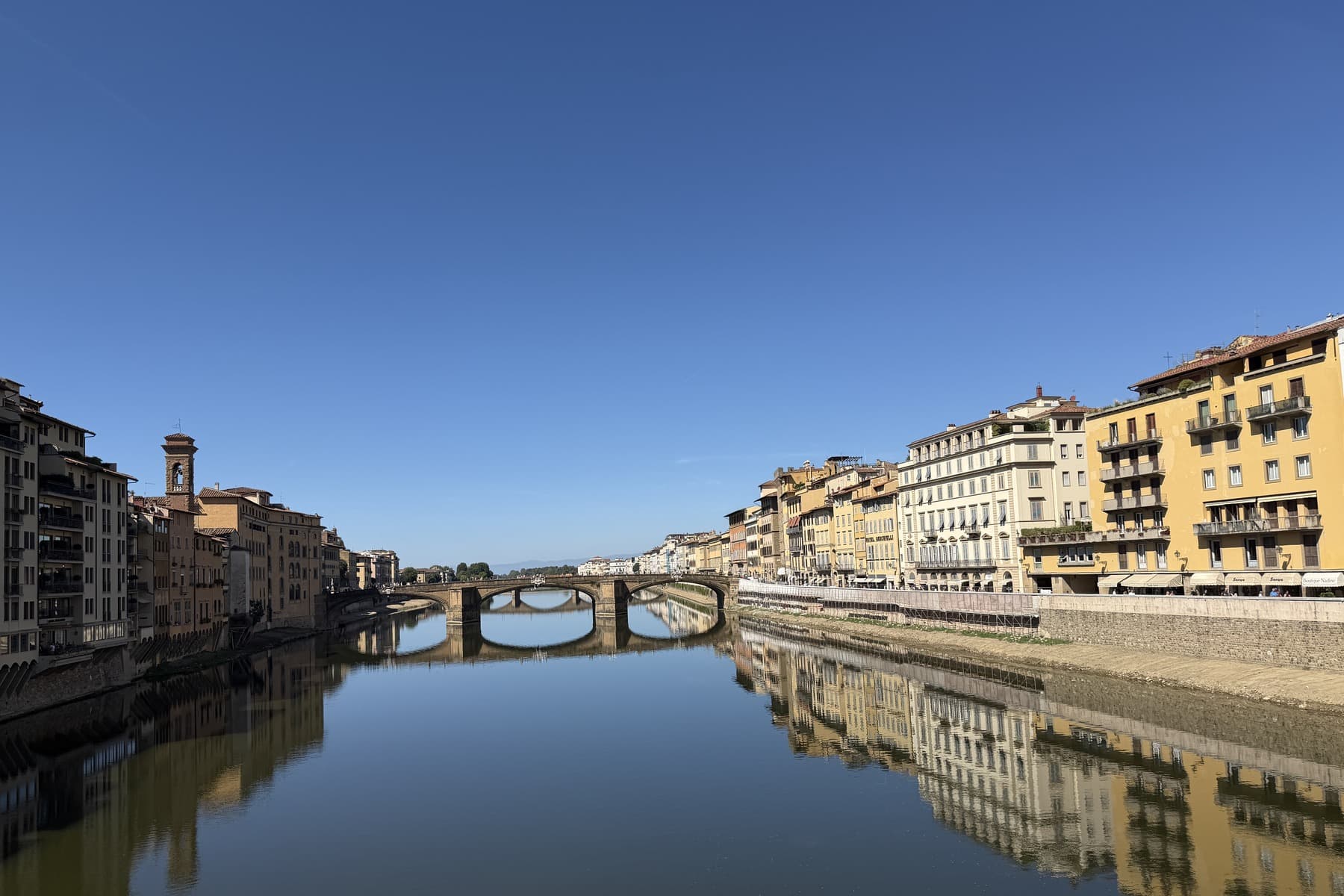
One thing the postcard version leaves out: September is wetter than August, with around 74mm of rain over about seven rainy days against August's 40mm (Consorzio LaMMA). In practice that means short, loud thunderstorms rather than grey days, and a compact umbrella rather than a changed itinerary. The light is the compensation: the haze of high summer lifts, the hills sharpen back into view, and the golden hour stretches out over the Arno in a way August's glare never allows.
Why this matters beyond comfort: the middle of the day comes back. In August the hours from eleven to four are lost to the heat and the whole day bends around them. From mid-September you can walk at noon, picnic at one, and let children run at three. That single change is what makes the parks section below worth its space. The city refills on the same curve, and accommodation eases off its summer peak as demand shifts, though we could not pin a reliable percentage on that from any source we trust, so treat exact discounts as marketing until you see the price for your dates.
What is on, in date order
Sunday 6 September: the free museum Sunday. The national first-Sunday scheme runs, and the state museums take part: the Uffizi, the Accademia, the Bargello group, Pitti and Boboli among them (Ministero della Cultura; Gallerie degli Uffizi). No booking is possible and priority access is suspended, so the only way in is to turn up and wait; go at opening or pick a smaller museum. The trap to know: the civic museums run their own first-Sunday scheme for residents of the metropolitan area only, so Palazzo Vecchio still charges visitors that day.
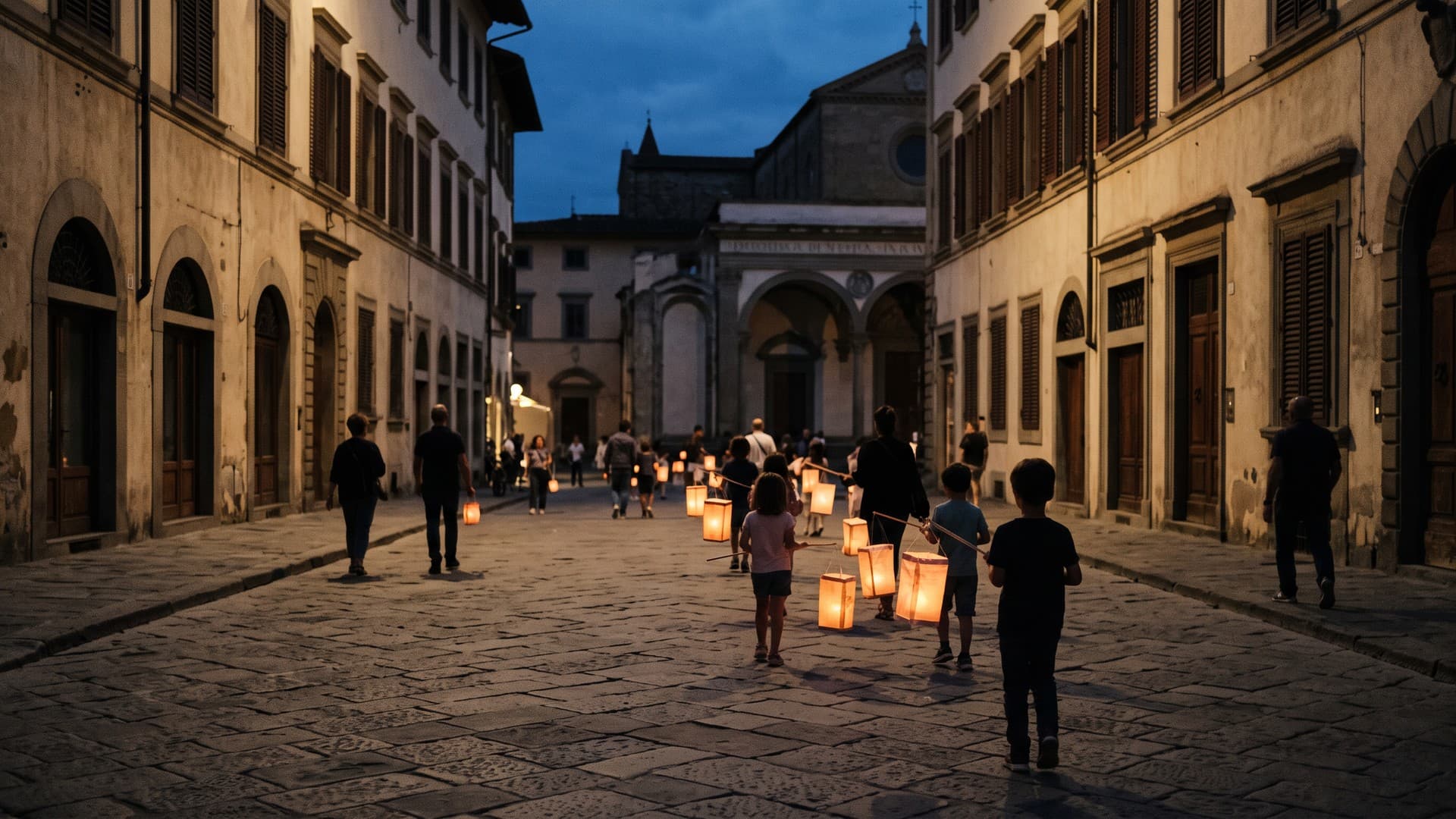
Monday 7 September: the Festa della Rificolona, and if you are in Florence for one evening this month, this is the one. On the eve of the Nativity of Mary, children carry candle-lit paper lanterns, the rificolone, through the streets, converging on Piazza della Santissima Annunziata at 21:30 for the judging of the most beautiful lantern and a final concert, with a procession arriving on foot from the Impruneta sanctuary through the Ponte Vecchio, Piazza della Signoria and the Duomo (FeelFlorence; Comune di Firenze). The festival's roots explain its strange rules. For centuries, farmers and pilgrims walked in overnight from the countryside for the feast and its market, carrying lanterns on poles to light the road, and the city youths met the country arrivals with mockery and well-aimed peashooters. The tradition kept the teasing: while some children carry the lanterns, others try to shoot them down, and a burning rificolona draws a bigger cheer than a surviving one. It is the rare Florentine festival that belongs to the city's children rather than its visitors, which is exactly why it is worth your evening. The neighbourhood quarters run their own smaller parades and lantern workshops the same evening, which are gentler with small children. The Comune publishes the exact assembly times in the first days of September; check before you set out, because routes and times move year to year.
Saturday 19 to Sunday 20 September: Rinascimento in Villa, out in Rufina, a costumed Renaissance festival at the villa the Bacco Artigiano wine tradition calls home, on the region's official 2026 calendar of historic re-enactments (Regione Toscana). A half-day trip rather than a city event; pair it with the wine country at its best moment.
Saturday 26 September: the Carro Matto. An ox-drawn cart stacked with a pyramid of Chianti flasks rolls into the city from Rufina, is blessed on the Duomo steps, and arrives in Piazza della Signoria with the historic parade and flag-throwers, marking the harvest as it has for centuries; the city's tradition page fixes it on the fourth Saturday of September, inside the 51st Bacco Artigiano festival running 24 to 27 September (Comune di Firenze; Bacco Artigiano). The hour-by-hour timetable publishes mid-month.
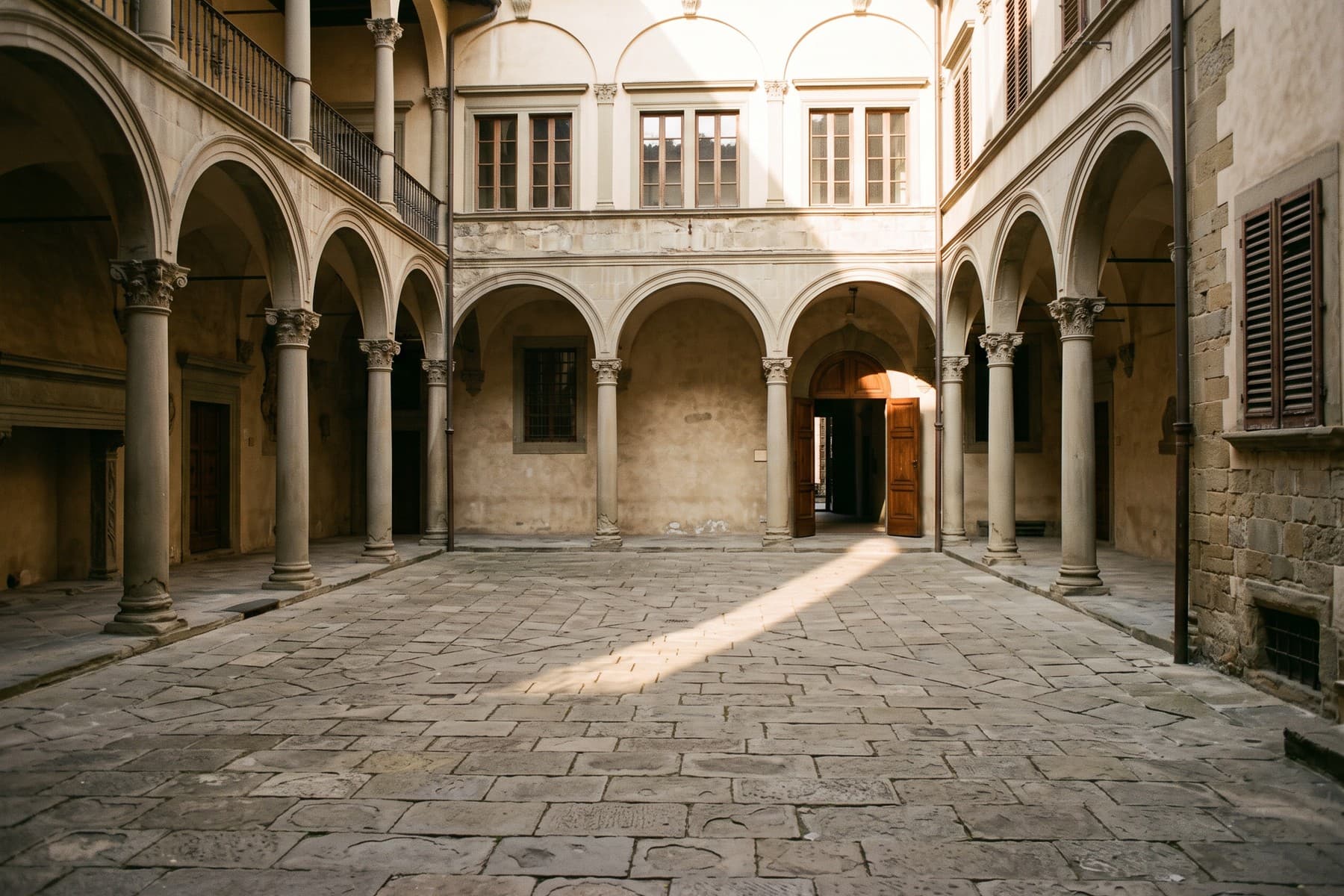
Saturday 26 to Sunday 27 September: European Heritage Days, the strongest practical item of the month. Across Italy, palaces, archives and churches that are normally closed open their doors, and on the Saturday evening state museums open late at a symbolic €1 (Ministero della Cultura). The honest caveat: as we write, the Florence programme is still being published site by site, with the State Archive the first confirmed entry, and the full list lands on the ministry's GEP pages through September. If your trip covers that weekend, check the list a few days before; it is the one chance all year at some of these rooms.
Sunday 27 September stacks two more. Corri la Vita, the city's huge charity run in its 24th year, starts at the Cascine at 9:15 and finishes in Piazza della Signoria, and the €10 registration shirt doubles as a free pass into dozens of cultural sites that afternoon (Corri la Vita). And in Impruneta, half an hour south, the Festa dell'Uva marks its hundredth year: four rioni, allegorical floats, and a village that has been rehearsing since August (Festa dell'Uva). If the last September weekend is yours, you will not be short of reasons to be outdoors.
The parks, which September gives back
This is the section families come for, so here is the frame, honestly: September is the month Florence's parks become usable again, free, unbookable, and the answer to what you do between lunch and dinner without a queue. We use them with our own son; this is the residents' list, current as of 30 August 2026, warts included. They all live on our family page too.
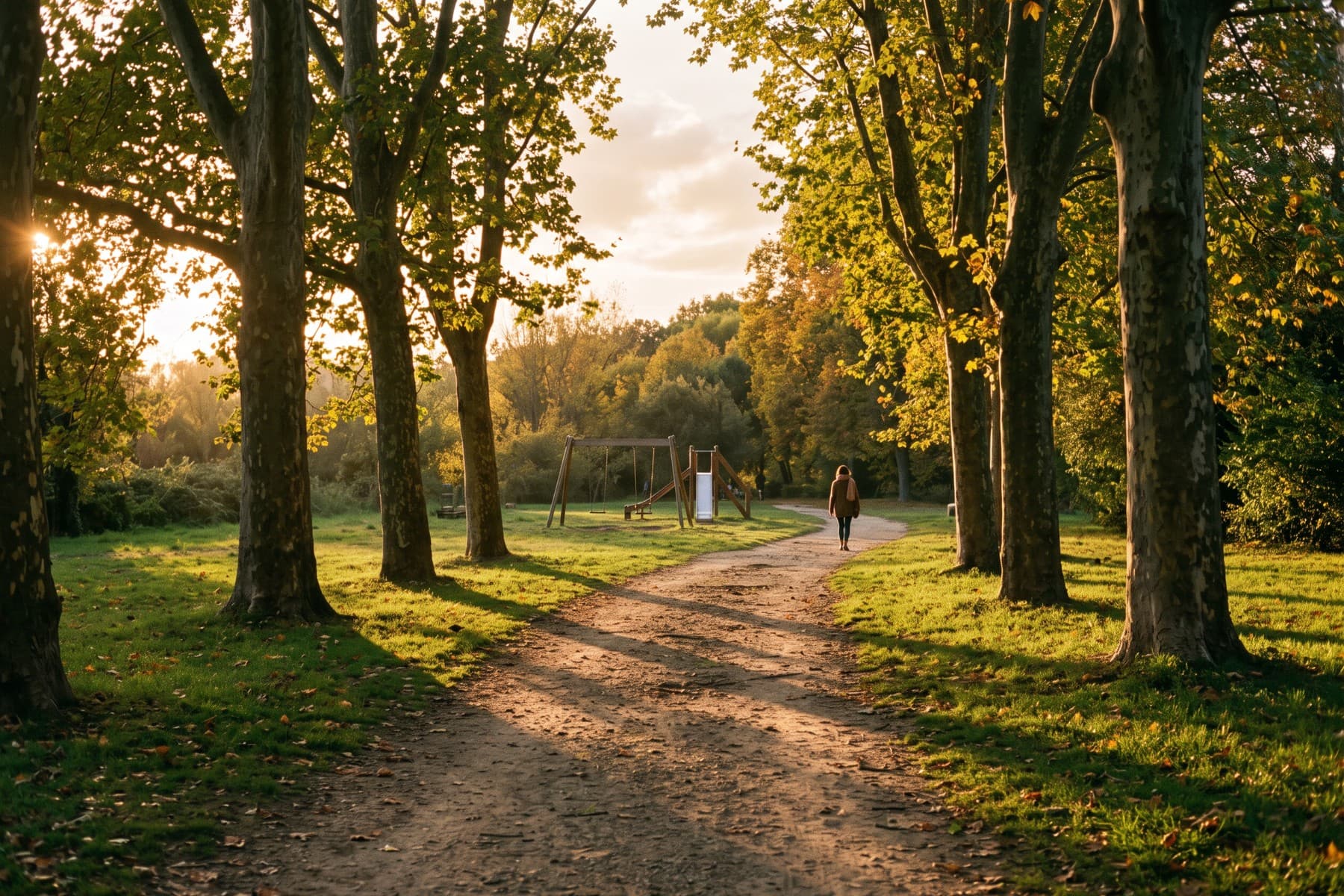
Parco delle Cascine is the big one, 130 hectares along the Arno with around 19,000 trees, playgrounds including the fenced play area at Piazzale Jefferson, and the Tuesday morning market, roughly three kilometres of stalls and the cheapest shopping in the city (Comune di Firenze). One September-specific warning: the park's swimming pool, Le Pavoniere, closes for the season on 6 September 2026 (Comune di Firenze), so the pool is a first-weekend-only option, not a September plan. And one residents' caution: after a serious falling-branch injury in June 2025 the park's old trees are under rolling checks, so on hot, still days spread the picnic blanket in the open rather than under the largest limbs.
Anconella and Albereta, on the left bank, are the city's second green lung and its best-kept family secret: playgrounds, a basketball court, a free five-a-side pitch, an amphitheatre, picnic tables, and the detail this site exists for, a 1:5 scale model of Brunelleschi's dome, built brick by herringbone brick with period techniques, standing in a public park where children climb around it (Comune di Firenze; FeelFlorence). Two honest notes: the model has been a repeat target for graffiti, so it may not be pristine when you visit, and the Albereta end has spent two years as the worksite for the new tram bridge that opened in May, with the promised skate park and re-landscaping not yet confirmed finished. Keep to the Anconella end with children and you lose nothing.
Giardino dell'Orticoltura, up the Via Bolognese side, is the small one with the outsized charm: a playground at the back (in full sun on September mornings, go after four), the dragon fountain on the Parnaso stair, trains passing close enough along the railway boundary to stop small children mid-sentence, and the Tepidarium, the largest 19th-century iron-and-glass greenhouse in Italy, which hosts events year-round and an autumn plant market in early October (Comune di Firenze). The paths are gravel; a stroller will fight you gently the whole way.
Giardino Baden Powell, below the Stibbert museum, is the small local one: swings, a slide, see-saws, big shade trees and a little stream that toddlers find and parents watch. It is a neighbourhood garden rather than a destination, which is exactly its charm; we have not walked it in recent weeks, so take the equipment list as its usual state rather than a guarantee.
Parco di Villa Strozzi covers the hillside above Soffiano with woodland paths, an open-air theatre in the old limonaia, and a wooden, accessible play area in the Via di Soffiano section (Comune di Firenze). It is also on the Comune's climate-shelter list, along with the Cascine, which matters in that hot first week.
And Boboli, for contrast: the famous one, and the one you pay for, at €10 on the day or €13 booked ahead, open 8:15 to 18:30 in September with last entry at 17:30, and closed on the first and last Monday of the month, which in September 2026 means the 7th and the 28th (Gallerie degli Uffizi). Worth the ticket for the amphitheatre, the avenues and the view when the garden is part of your day's architecture; the wrong call when what your children need is two hours of running, which the free parks above do better for nothing. And if you are standing at Boboli's Porta Romana gate with exactly that problem, Giardino del Bobolino is straight down the hill from it: a free, tree-shaded public garden along Viale Machiavelli, no ticket and no gate.
The practical part
The night ZTL is still on. Florence's summer night driving restrictions run to 4 October, Thursday to Saturday nights, 23:00 to 03:00, and September visitors regularly assume summer rules ended with August. They did not. The full map, hours and the hotel plate-registration trick are in the ZTL guide, and everything on trams, buses and the new fares is in getting around Florence.
The city reopens through the first half of the month. The family trattorias and workshops that closed for the August holidays come back in waves, most in the first week, the stragglers by mid-month; if a place you loved looked shut in August, check again before mourning it, as our August guide explains.
What needs booking: almost none of the above, which is September's quiet virtue. The free Sunday cannot be booked at all. The Rificolona, the Carro Matto and the parks are turn-up events. Heritage Days evening openings may take reservations site by site once the list publishes, and the Festa dell'Uva sells grandstand tickets. Book your restaurants from the third week, when the residents are back and competing with you for tables.
Who September is for, honestly
Different travellers get different Septembers, so here are separate answers rather than one.
Families: the best month of the second half of the year. The heat breaks, the parks come back, the lantern festival is built for children, and from mid-month Florentine families are home with their own children, which is when the playgrounds are worth going to. Only the first-weekend pool closure argues for early booking.
Couples: harvest season. The Carro Matto, the wine country around Rufina and Impruneta at its fullest moment, softer light on the bridges, and evening walks that August denied you.
Culture-first and solo travellers: Heritage Days opens rooms that are shut the other 363 days, the €1 Saturday evening is the cheapest culture of the year, and the free first Sunday falls on the 6th.
Budget travellers: rates ease from the summer peak, the free Sunday and the parks cost nothing, the Cascine market is the cheapest shopping in the city, and a €10 Corri la Vita shirt buys an afternoon of open doors. A cheap, full September week is entirely possible.
And who should not come in September: anyone who needs guaranteed cool weather in the first week, or who came to meet Florentines. The 1st to the 7th is late August wearing a better outfit. If those are your only dates, our August in Florence guide is the honest playbook, because its advice still applies to them.
Everything else lives with the rest of our Florence guides.
Frequently asked questions
- Is September a good time to visit Florence?
- Yes, with one dated caveat. The first week is still hot, and still missing half its Florentines: shutters down on the residential streets, families still at the coast. Italian schools return around mid-month, and from the third week the city refills with the people who live in it. On the thirty-year climate normals, average highs fall from about 29°C in the first ten days to about 25°C in the last ten (Consorzio LaMMA), though 2026 has run well above those averages, so check a forecast for your dates. If you can choose your week, choose the second half.
- What is the Festa della Rificolona?
- Florence's paper-lantern festival, held on 7 September, the eve of the Nativity of Mary. Children carry candle-lit paper lanterns through the streets to Piazza della Santissima Annunziata, where the parades converge at 21:30, while other children try to shoot the lanterns down with peashooters. It is the most genuinely local evening of the Florentine year (Comune di Firenze; FeelFlorence).
- Are Florence museums free in September?
- On Sunday 6 September 2026, yes: the national free first Sunday runs, covering state museums including the Uffizi, the Accademia and the Bargello group. No booking is possible and priority access is suspended, so the only way in is to turn up and wait, and note the civic museums' own free Sunday is for local residents only (Ministero della Cultura; Gallerie degli Uffizi).
- Is September still hot in Florence?
- Early September is. On the thirty-year climate normals the first ten days average highs of 28.8°C, close to summer proper, easing to 27.2°C mid-month and 25.2°C in the final ten days. Those are long-run averages rather than a forecast, and 2026 has run well above them, so check the actual forecast for your dates. September also brings more rain than August, 74mm over about seven rainy days, mostly as short thunderstorms, so pack for warmth first and showers second (Consorzio LaMMA).
Sources and freshness
Checked against the official sources below on 31 August 2026.
- Consorzio LaMMA: Florence climate normals 1991-2020 (per-decade September temperatures, rainfall)
- ARS Toscana (Regione Toscana), reporting Consorzio LaMMA: July 2026 the hottest month recorded in Tuscany since 1955, and 27 days above 36°C in the Florence area across June and July
- ANSA, quoting Palazzo Vecchio: Florence's consecutive red heat-alert days, summer 2026 (12 from 20 June, 13 from 9 July)
- Comune di Firenze (Quartieri): Rificolona 2026 programme
- FeelFlorence: the Festa della Rificolona (21:30 convergence, Impruneta procession)
- Museo delle Civiltà (MiC): Domenica al Museo, 6 September 2026 (current, dated confirmation)
- Gallerie degli Uffizi: free-entry first Sundays (participation, no booking)
- Regione Toscana: 2026 calendar of historic re-enactments (Rinascimento in Villa, 19-20 Sept)
- Bacco Artigiano (Comune di Rufina): 51st edition, 24-27 September 2026
- Comune di Firenze (Cultura): the Carro Matto tradition (fourth Saturday of September)
- Ministero della Cultura: European Heritage Days 2026, 26-27 September
- Corri la Vita: 24th edition, Sunday 27 September 2026
- Festa dell'Uva di Impruneta: centenary edition, 27 September 2026
- Comune di Firenze (Ambiente): Parco delle Cascine (Tuesday market, facilities)
- Comune di Firenze (Portalegiovani): Le Pavoniere pool, 2026 season to 6 September
- Comune di Firenze (Ambiente): Albereta-Anconella (facilities list)
- FeelFlorence: Parco dell'Anconella (the 1:5 Brunelleschi dome model)
- Comune di Firenze: Tepidarium del Roster (the iron-and-glass greenhouse at the Orticoltura, events)
- Comune di Firenze (Ambiente): Parco di Villa Strozzi (play area, facilities)
- Gallerie degli Uffizi: Boboli Gardens (September hours, prices, Monday closures)