
Guide · Editorial
The best gelato in Florence
The best gelato in Florence isn't the neon stuff near the Duomo. How to spot real artisanal gelato in ten seconds, where to walk for it, and what to order.
Published 7 July 2026 · Updated 7 July 2026 · 6 min read
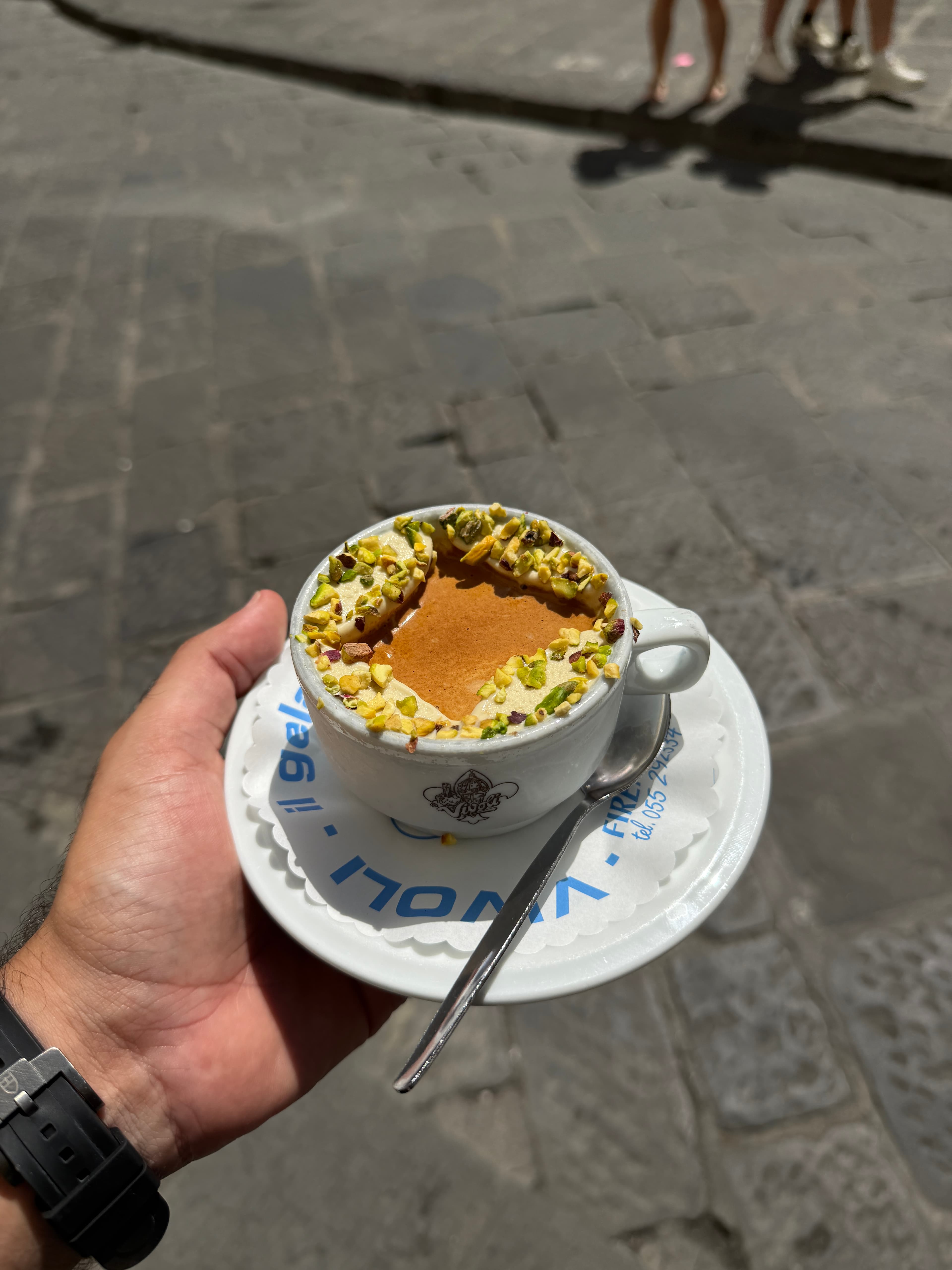
The best gelato in Florence is a few minutes' walk from the Duomo, not beside it — you'll know it by muted colours, covered steel tins, and a short seasonal menu. Gelato here is less a snack than an argument: the city claims to have invented it, defends the claim fiercely, and then serves most visitors a bright, whipped, additive-laden version in the streets around the cathedral. The rest is knowing the signs — which takes about ten seconds — and where to walk.
The origin story runs like this: Bernardo Buontalenti, the Medici court's architect and engineer, froze a scented cream for a grand-ducal banquet in the late 1500s — by tradition, the ancestor of Florentine gelato (The Florentine). Historians treat the tale with a raised eyebrow, but the city has run with it for four centuries, and it still has the flavour named after him to prove the point.
Gelato is also its own thing, not simply the Italian for ice cream. It's churned more slowly and served a little warmer, with less air whipped in and less fat than the American kind — which is why a good scoop tastes denser, smoother, and more intense, and why it melts fast in the July heat.
How to spot the real thing
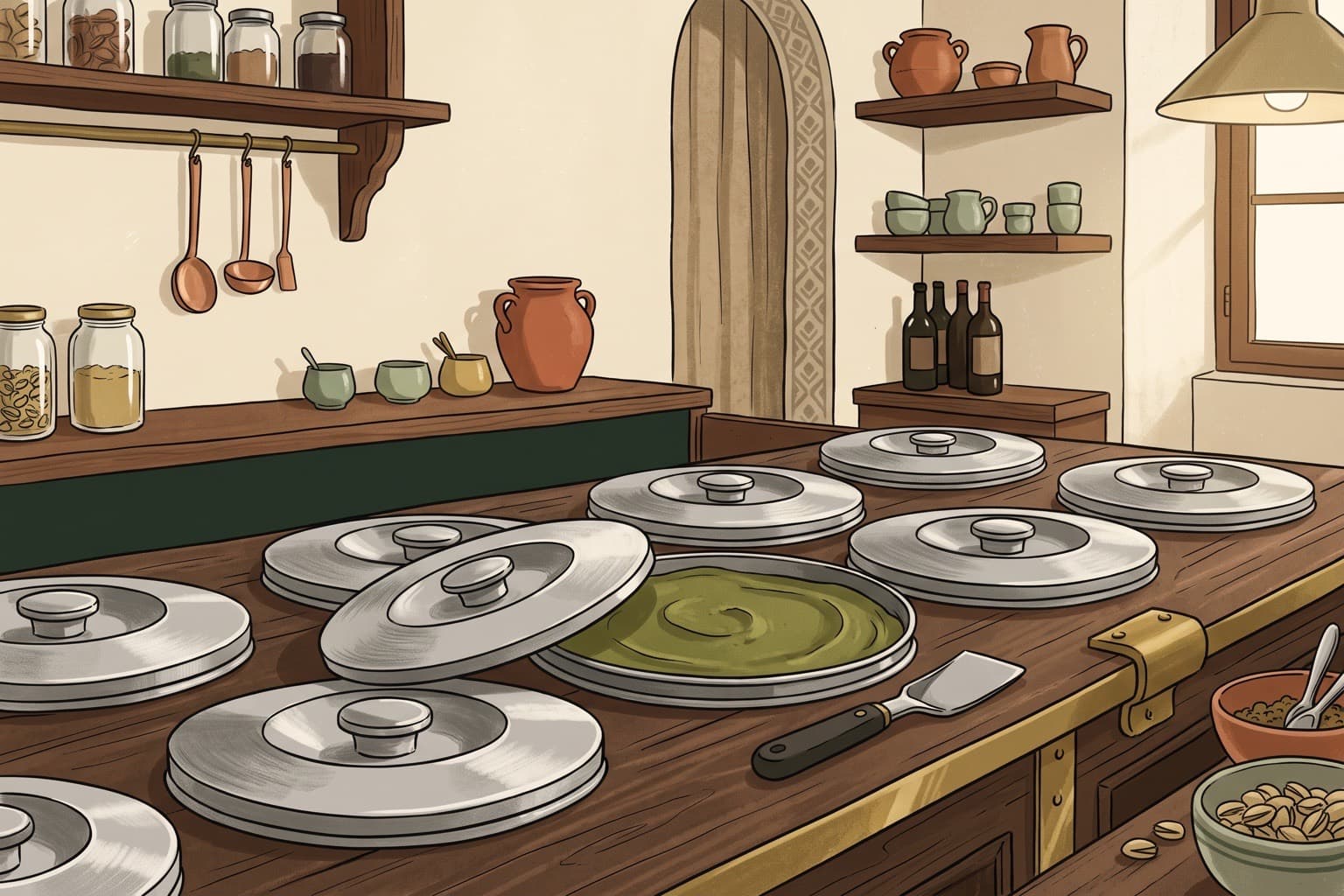
You can read a gelateria from the doorway — the display tells you almost everything before you taste a spoon. Real gelato artigianale is made in small batches on the premises and looks understated; the tourist product is engineered to look spectacular in a window. The tells (Visit Tuscany):
| Signal | Real artisanal gelato | Tourist product |
|---|---|---|
| Colour | muted and natural — dull-green pistachio, grey banana | bright, uniform, neon |
| Display | flat in the pan, or in covered steel tins (pozzetti) | piled into tall, fluffy mounds |
| Flavours | a short list that changes with the season | dozens, identical all year |
| Sign | produzione propria / artigianale — made here | none, or trucked in |
The single fastest check is the colour of the pistachio and the banana. If the pistachio is a bright spring green and the banana is sunshine yellow, they were coloured; the real versions are drab and grey, because that's what those ingredients actually look like. And a mountain of gelato standing up in peaks has been pumped with air and stabilisers to hold that shape — good gelato is too soft and dense to sculpt.
Where to walk for it
Step five minutes off the Duomo and the quality climbs fast — the good gelaterie are spread across the centre, Santa Croce, and the Oltrarno, which happens to make a natural crawl. These lists are the algorithm's current top-ranked picks by area, not our hand-picked favourites, so they stay honest as places change.
In the centre, one of the oldest names is Perché No!, tucked in a lane off Via dei Calzaiuoli and one of the oldest names in the centre. The centre's ranked picks:
Gelato in Centro Storico
- Chocolate shop
Venchi Cioccolato & Gelato, Firenze Piazza del Mercato Nuovo, Porcellino, Ponte
Centro Storico · Florence · 4.8 · 9,635 · Google
In Santa Croce, the anchor is Vivoli, family-run since 1930 and reckoned the city's oldest gelateria (Vivoli). It serves in cups, not cones, and is best known for its affogato — a scoop of gelato drowned in a shot of hot espresso and eaten with a spoon, the pistachio-rimmed cup pictured at the top of this guide.
Gelato in Santa Croce
Across the river in the Oltrarno, the quieter, more local end of town, Gelateria della Passera sits on its tiny namesake square, and there's a cluster more along the south bank. The Oltrarno's ranked picks — a fine end to the Oltrarno walk:
Gelato in Oltrarno
- Ice cream shop
Venchi Cioccolato e Gelato, Firenze Ponte Santa Trinita
Oltrarno · Florence · 4.6 · 4,034 · Google
- Ice cream shop
Edoardo il Gelato Biologico Gelateria Ponte Vecchio
Oltrarno · Florence · 4.8 · 332 · Google
What to order
Try the Buontalenti at least once — it's the flavour Florence built. It's a plain, intense cream of just four things — milk, cream, sugar, and eggs, one of the shortest ingredient lists in gelato — and it won a 20th-century competition held to honour the architect, created at Gelateria Badiani (open since 1932), which is still its home (Badiani).
Among the year-round classics worth a spoon are fior di latte (pure sweet milk, the plainest test of a gelateria), stracciatella (milk shot through with shards of chocolate), and a proper dark cioccolato fondente. Beyond those, order by the season. In summer the thing to get is a sorbetto — the dairy-free, fruit-and-water cousin of gelato, and the vegan option — in whatever fruit is ripe: fig, melon, peach, the deep-red anguria (watermelon). A short chalkboard of seasonal flavours is a good sign; a laminated menu of forty is not. Reckon on around €2.50–4 for a small cone or cup, a euro or so more in the shadow of the Duomo — prices drift, so take that as a guide.
Practical notes
A few small choices make the gelato better. Take a coppetta (cup) over a cone if you want to actually taste the gelato rather than the wafer — many of the best places, Vivoli among them, serve only in cups for exactly that reason. Gelato is an afternoon or after-dinner ritual here, not a breakfast; the passeggiata, the evening stroll, is the classic time, cone in hand across a piazza in the last of the light.
Two honest notes. Dairy-free eaters are well served by the fruit sorbetti, but ask, since some are made on shared equipment. And gelaterie keep their own hours — a few of the smaller ones trim their days or close for a stretch in the coldest months, so in deep winter it's worth checking before a special trip. For the wider picture of eating in the city, see where to eat in Florence, and for the quarters these gelaterie sit in, the Santa Croce and Centro Storico walks.

Ready to pick a scoop? Browse every ranked gelateria in Florence →
Frequently asked questions
- How do I recognise artisanal gelato?
- Look for muted, natural colours — real pistachio is a dull green, not neon; banana is grey, not bright yellow — a short, seasonal list of flavours, gelato kept in covered steel tins rather than piled in fluffy mounds, and the words produzione propria or artigianale, the signs it's made on site (Visit Tuscany).
- What gelato flavour is Florence famous for?
- Buontalenti — a plain, intense cream of just milk, cream, sugar, and eggs, named after the Medici court's architect, who is traditionally credited with an early frozen cream. Gelateria Badiani is the flavour's home (The Florentine; Badiani).
- How much should gelato cost in Florence?
- Around €2.50–4 for a small cone or cup at a good gelateria, a little more right beside the Duomo or the Ponte Vecchio. Prices drift, so treat these as a guide rather than a rule.
- Is gelato different from ice cream?
- Yes. Gelato has less air and less fat than American-style ice cream and is served slightly warmer, so it tastes denser and more intense. Sorbetto is its dairy-free, fruit-and-water cousin — the vegan-friendly option (Visit Tuscany).
Sources and freshness
Checked against the official sources below on 7 July 2026.