
Guide · Editorial
Bistecca alla fiorentina: how to order it right
Bistecca alla fiorentina, explained: the cut and the rules, the per-etto bill, what breed you're really eating, and where to order one.
Published 8 July 2026 · Updated 8 July 2026 · 5 min read
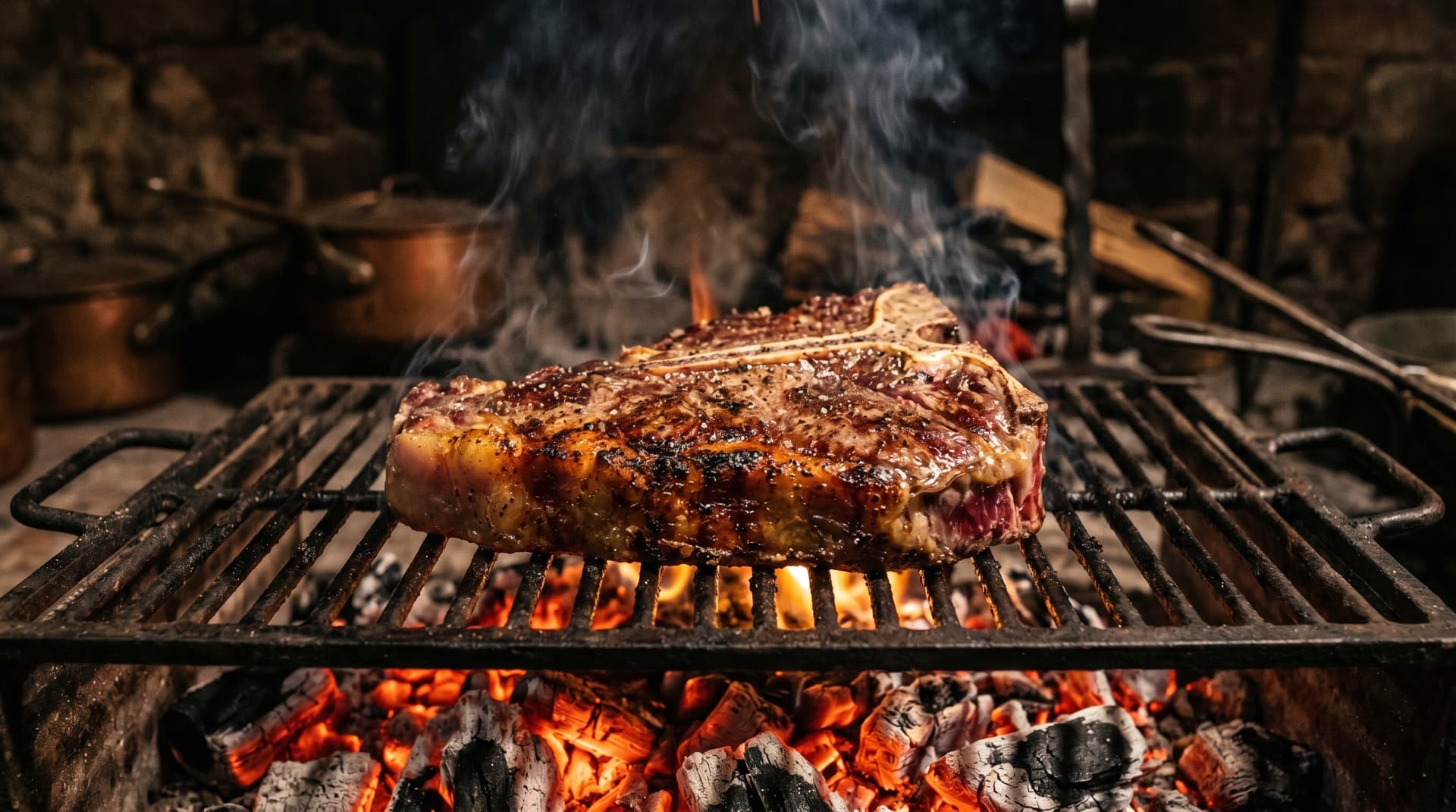
A real bistecca alla fiorentina is a single thing done seriously: a thick T-bone from the loin, grilled over embers, served rare, and priced by weight so it can be shared. If you remember only two facts before you order, make them these — it comes rare, and the price on the menu is per etto (100 grams), not per plate. Get those wrong and you're either sending it back or gasping at the bill.
The name is a giveaway of its history. "Bistecca" is an anglicism, borrowed into Tuscan from the English "beefsteak" in the 1800s. There's a good story that it started when English travellers at a Medici feast shouted "beef steak!" at a roasting ox — but that's folklore, the tellings can't agree on which feast it was, and the word's paper trail is nineteenth-century, not sixteenth (Visit Tuscany). Take the legend as seasoning, not fact.
The rules
A fiorentina has a shape the kitchen won't bend on: thick, bone-in, rare, and big enough to split. The cut is a T-bone from the loin — the fillet on one side of the bone, the sirloin on the other — carved four to five fingers thick, and it usually weighs upwards of a kilo (Visit Tuscany). It's grilled dry over embers, no oil until after, and served al sangue — rare, seared outside and red within. That rareness is close to non-negotiable: a good trattoria will resist a well-done order and may simply decline it. Here's what's normal, and what should make you pause:
| A real fiorentina | A red flag | |
|---|---|---|
| Price | by weight — €/etto (100 g) or €/kg on the menu | one fixed low price "per person" |
| Cut | a thick, bone-in T-bone | thin, boneless, or pre-portioned |
| Size | ~1–1.2 kg, brought out to share | a single steak plated for one |
| Doneness | rare, no argument | well-done offered without a blink |
| Cooking | grilled to order over embers | arrives suspiciously fast |
The bill, explained
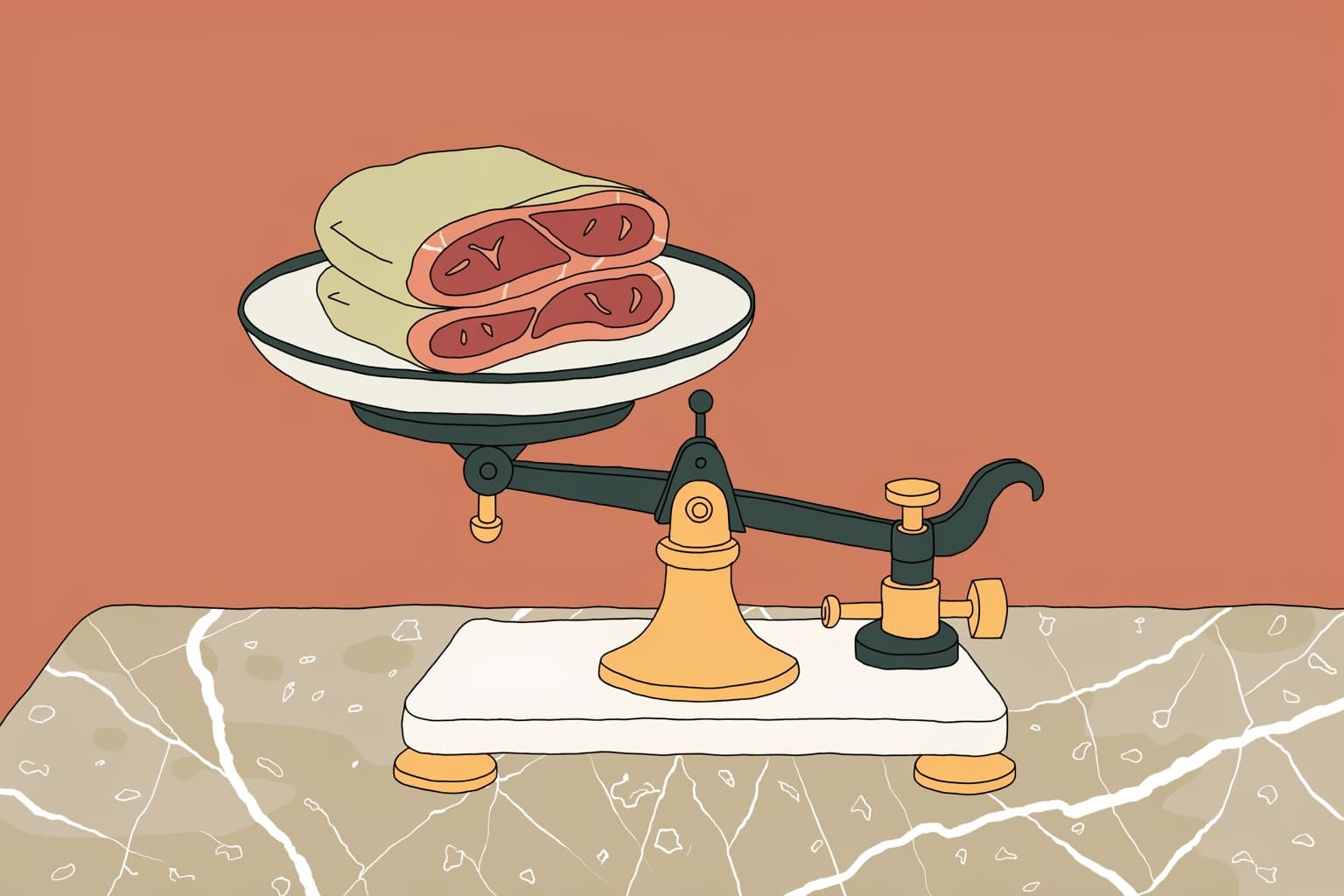
The moment that catches people out is the bill — because a fiorentina is priced per etto, not per portion. An etto is 100 grams, so a menu reading "€6" means €6 per etto, which is €60 a kilo. Do the arithmetic before you order: a normal 1.2-kilo steak is twelve etti, so about €72 for the meat — before sides and wine. The shock is real but the maths is simple, and it isn't €72 a head: it's €72 for a joint that feeds two or three.
As of 2026, a Florence trattoria will charge roughly €45–70 per kilo for the steak itself, which puts a shareable 1–1.2 kg cut at about €45–85; prime, aged Chianina runs higher, and contorni and wine are always on top (Scattidigusto). Prices drift, so treat those as a guide. The tourist-trap version does the opposite of all this — it sells a "bistecca" at a fixed low price per person, arrives too fast to have been grilled to order, and won't have been anywhere near a kilo.
What you're actually eating
Not every fiorentina is Chianina — and honest places don't pretend otherwise. The romance belongs to the Chianina, the huge white Tuscan breed, but the EU-protected name is Vitellone Bianco dell'Appennino Centrale IGP, which certifies the meat — from Chianina, Marchigiana, or Romagnola cattle — rather than a single breed; a "Chianina IGP" doesn't technically exist (Consorzio Vitellone Bianco). And in practice, a great deal of the bistecca served in Florence is Scottona — a young heifer, prized for its marbling — or another breed entirely, not certified Chianina at all.
None of that makes it worse: a good Scottona steak is superb, and plenty of the city's best-known grills work with several breeds by choice. But it's worth knowing, because "Chianina" gets printed on a lot of menus loosely. If you specifically want the real thing, ask what breed and origin it is — and expect to pay more for genuine, aged Chianina.
Where to eat it
Florence has a deep bench of bistecca houses, from century-old cellars to market trattorie — pick by the mood, not by a ranking. The rankings are the algorithm's job; for the ordered list, browse the restaurants. For character, a few institutions worth knowing: Buca Lapi, a cellar grill going back to 1880; Il Latini, all communal tables and hanging hams; Trattoria Mario, the no-bookings, lunch-only bench by the San Lorenzo market; Regina Bistecca, a smarter central room built around the steak; and Trattoria Dall'Oste, whose chianineria lets you pick among a dozen breeds.
Most of these sit in or near the centre and San Lorenzo — the ground the Centro Storico walk covers — and the busy ones fill for dinner, so book ahead where you can. For the wider picture of eating in the city, see where to eat in Florence, one of our Florence guides.
What to have with it
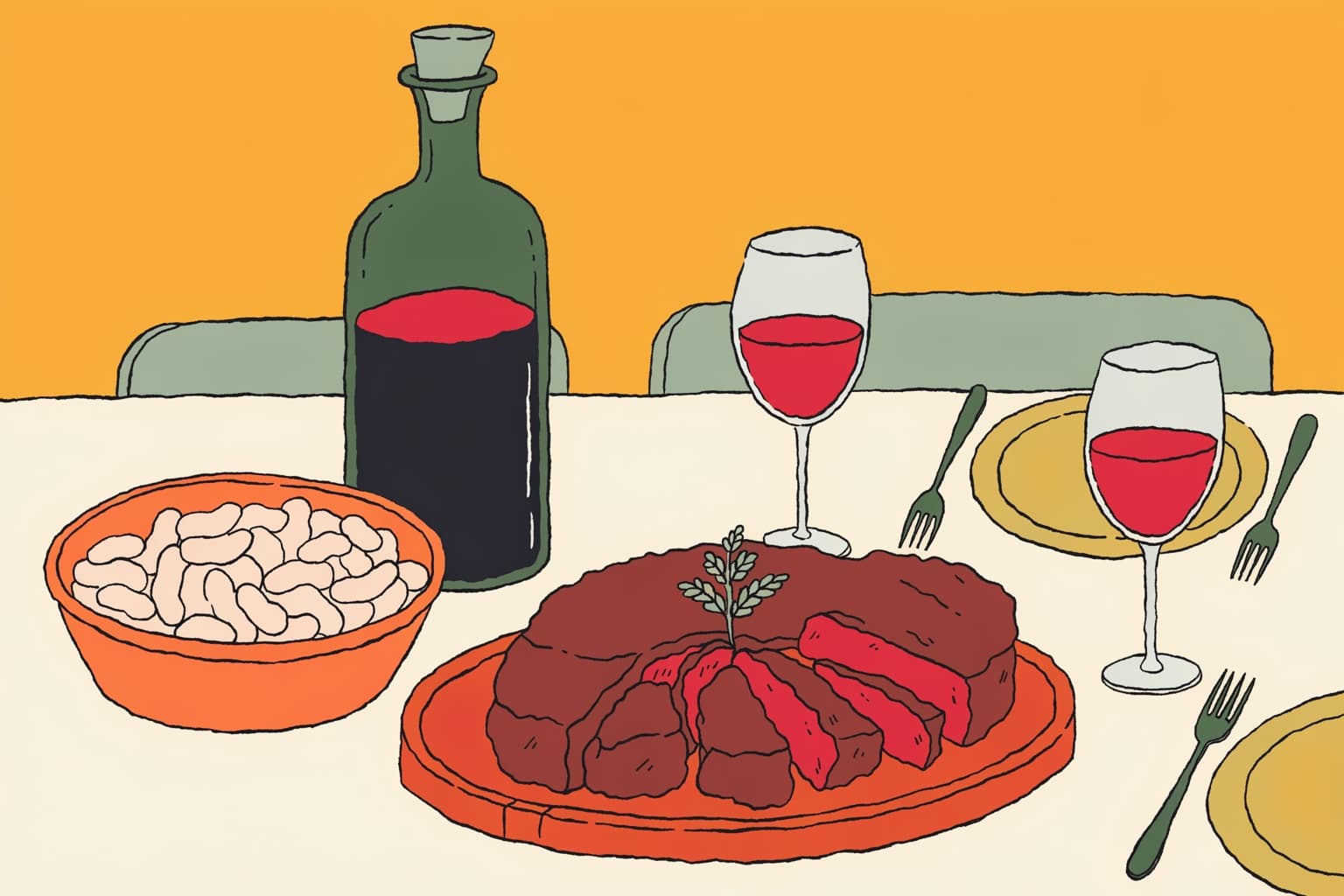
Keep the table around the steak simple. The classic partners are fagioli — white cannellini beans, plain with oil or stewed all'uccelletto with tomato and sage — and roast or fried potatoes, with a peppery Tuscan red, a Chianti Classico or something bigger, to stand up to the meat. Start light if you're having antipasti; the bistecca is the meal, not a course. And leave room, because gelato is the correct ending — see the best gelato in Florence.
Ready to find your grill? Browse Florence's top-ranked restaurants →
Frequently asked questions
- Can you order bistecca alla fiorentina well done?
- By convention, no — a fiorentina is served al sangue (rare), and a serious trattoria will push back on a well-done request and may decline it. It's a strong cultural rule rather than a law, but a place that offers well-done without blinking is often a sign you're in a tourist spot (Visit Tuscany).
- How much does bistecca alla fiorentina cost in Florence?
- It's priced by weight — the menu shows a rate per etto (100g) or per kilo. As of 2026, reckon on roughly €45–70 per kilo for the steak at a trattoria, so a shareable 1–1.2 kg cut runs about €45–85, with prime aged Chianina higher and sides and wine always extra (Scattidigusto).
- How is a fiorentina different from a normal steak?
- It's a specific cut — a thick T-bone from the loin, with the fillet on one side of the bone and the sirloin on the other — cut four to five fingers thick, grilled over embers, served rare, and sized to share rather than plated for one (Visit Tuscany).
- How big is a bistecca, and can two people share it?
- Yes — sharing is the norm. A proper fiorentina is around 1–1.2 kg, often more, and is meant for two or three people; ordering one each is a tourist move, not a local one (Visit Tuscany).
Sources and freshness
As observed on 8 July 2026.